
 6 Min Read
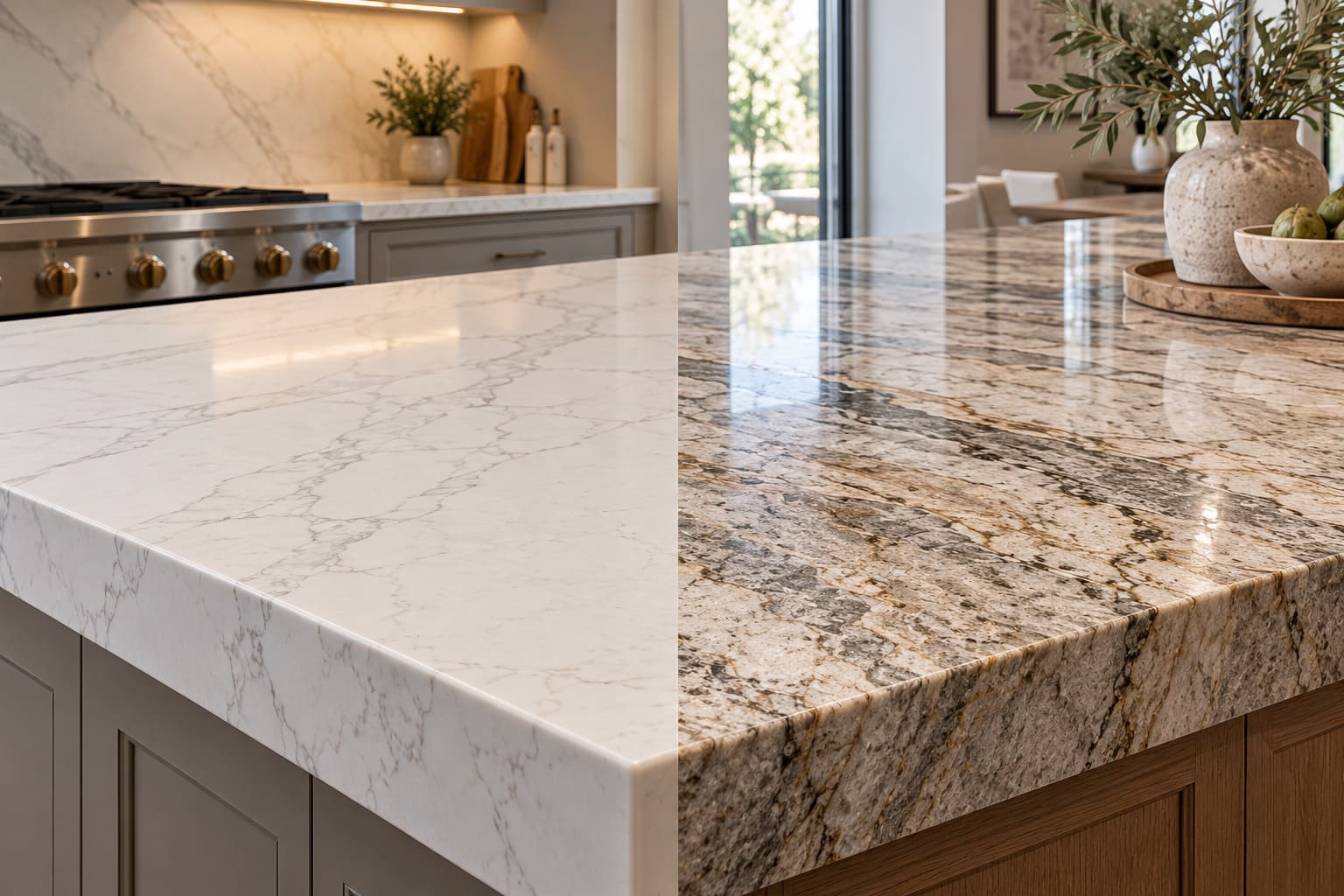
Quartz countertops are engineered surfaces made with mineral content and binders, while quartzite is natural stone formed through geological processes. Many engineered quartz surfaces are nonporous and do not need sealing; quartzite varies in porosity and may need sealer based on the particular slab. Both can be durable choices, but neither should be treated as indestructible. The best option depends on appearance, heat habits, cleaning expectations, slab selection and fabrication details.
The names sound nearly identical, but quartz and quartzite are not interchangeable materials. Homeowners often choose between them when planning a new kitchen island or replacing worn countertops. The decision affects not only the final look but also cleaning routines, sink cutouts, seam placement and how the countertop works with cabinetry and appliances.
What Is the Difference Between Quartz and Quartzite?
Engineered quartz is manufactured into slabs using a blend of mineral material, binders and pigments. The exact composition and properties vary by brand and product line. It provides a relatively predictable selection of patterns, colors and finishes across slabs of the same design.
Quartzite is quarried natural stone produced when sandstone is transformed by heat and pressure. Every slab has its own mineral pattern, veining and visual character. Natural quartzite is often a good fit for homeowners who want a one-of-a-kind surface, but characteristics such as porosity vary from stone to stone.
Neither name describes a complete installed countertop. Fabrication quality, support, seams, edge treatment and installation still matter.
Quartz vs. Quartzite at a Glance
Feature | Engineered quartz | Natural quartzite |
Material | Manufactured composite surface | Quarried natural stone |
Pattern | Often more repeatable by product line | Unique from slab to slab |
Sealing | Typically not required for nonporous quartz | Depends on actual slab porosity |
Hot cookware | Use trivets; follow manufacturer guidance | Natural stone tolerances vary; use trivets as a practical precaution |
Cleaning | Follow brand-specific cleaning instructions | Use stone-appropriate products and supplier guidance |
Selection process | Confirm sample, finish and batch | Inspect and approve the actual slab where possible |
Which Material Is Easier to Maintain?
Engineered quartz is often attractive to households seeking relatively low-maintenance countertops. For example, Caesarstone describes its quartz surfaces as nonporous and states that they do not require sealing. Its care guidance still recommends prompt cleanup of spills, mild cleaning products and avoiding harsh chemicals.
Quartzite care depends on the actual stone. The Natural Stone Institute explains that porosity varies even among products sold as quartzite. Some slabs benefit from sealer, while others absorb relatively little. Ask the stone supplier whether the selected slab needs sealing, what product is appropriate and how to recognize when further treatment may be useful.
Do not accept a blanket statement that all quartzite must be resealed on one fixed schedule. The correct approach depends on the stone, sealer, finish and use.
Can You Put a Hot Pan on Quartz or Quartzite?
For engineered quartz, manufacturer guidance matters. Caesarstone advises using trivets or hot pads rather than placing hot cookware directly on its surface. Heat or sudden temperature changes can damage countertop materials even when they are durable in everyday use.
Quartzite is natural stone, but that does not make every installed countertop immune to thermal stress, damage around edges or problems caused by sudden temperature changes. Trivets are a sensible habit for both choices. Avoid basing a countertop decision on the promise that a material is “heatproof.”
What About Stains, Scratches and Etching?
Engineered quartz resists many ordinary spills, but it can still show marks or be damaged by unsuitable cleaning agents or excessive heat. Quartzite can be hard and abrasion-resistant, but its resistance to staining depends on porosity and finish. The Natural Stone Institute also warns that some stones marketed as quartzite are actually other rock types with different chemical behavior.
If a showroom describes a slab as quartzite, ask for its accurate identification and care instructions. A polished sample, a label and a sales description are not substitutes for knowing what material will be fabricated and installed.
How Do You Choose the Right Slab and Finish?
A good countertop decision includes more than color. Compare the actual finish under your kitchen lighting. Review how the slab’s veins will turn at corners, how the sink and cooktop cutouts affect the pattern, and where seams may be required. Cabinet dimensions, overhangs, appliance clearances and support conditions should be confirmed before fabrication.
For natural quartzite, look at the full slab rather than relying only on a small sample. For engineered quartz, check whether the large-format pattern, finish and edge detail create the appearance you expect. Ask for the applicable manufacturer’s care guidance either way.
When Quartz May Be the Better Fit
Quartz may suit a household that values a consistent design language across an island and perimeter countertops, wants a broad range of manufactured finishes and prefers to avoid routine sealing where the chosen quartz product does not require it.
That still leaves practical decisions about heat protection, cleaning products, seams, backsplash materials and installation. A low-maintenance surface is not a no-maintenance surface.
When Quartzite May Be the Better Fit
Quartzite may appeal to homeowners seeking natural veining, movement and a unique slab as a focal point. It can create a strong visual feature on a kitchen island or full-height backsplash, but the homeowner should be comfortable with natural variation and the care needs of the actual stone.
The right quartzite selection is one whose properties and appearance are clearly understood, not simply the slab with the most dramatic showroom lighting.
How Countertop Choice Fits a Kitchen Remodel
The countertop should be coordinated with cabinet layout, lighting, sink position, backsplash, appliances and any planned island. Changing the material without reviewing these connected choices can create avoidable problems in the finished kitchen.
The Natural Order kitchen project is an example of a completed ARTOS kitchen with a large island and coordinated cabinetry, flooring and lighting. Its public case description does not identify the countertop mineral or manufacturer, so this article does not use it as a quartz or quartzite product endorsement.
If you are comparing surfaces as part of kitchen remodeling in Charlotte, the best next step is to review the whole kitchen scope instead of selecting a material in isolation. Contact ARTOS to discuss layout, cabinetry, surfaces and finish coordination.
Frequently Asked Questions


No. Quartzite is a natural stone; engineered quartz is a manufactured countertop material.
No single rule applies to every slab. Porosity varies; follow guidance for the actual stone and its finish.
No. Many products resist common stains, but manufacturer care instructions still matter and surface damage is possible.
It depends on the household’s care habits, design priorities, selected product and use of hot cookware. Compare the actual slabs or samples and their written maintenance recommendations.
ARTOS Editorial Team
The ARTOS Editorial Team creates practical remodeling guides based on homeowner questions, ARTOS project experience, and reliable industry and local sources.